
Dentures Westbury
Bringing Back Your Whole Smile
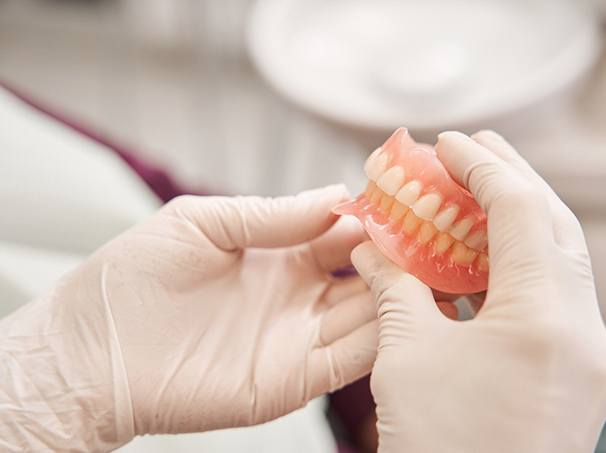
As embarrassing as it may seem, losing your teeth is a surprisingly common issue. Adults of all ages – young ones, the middle-aged, and seniors especially – can experience this problem. For these reasons, our practice provides an optimal solution to tooth loss: dentures in Westbury! By using these time-tested prosthetics, you can quickly get your full and gorgeous grin back. Just keep reading to learn more about them, or book a consultation to see us in person.
Why Choose Westbury Dental Spa for Dentures?
- Highly-Experienced Dentists
- Quality Materials for Beautiful, Long-Lasting Results
- Implant Dentures Available
Who is a Good Candidate for Dentures?
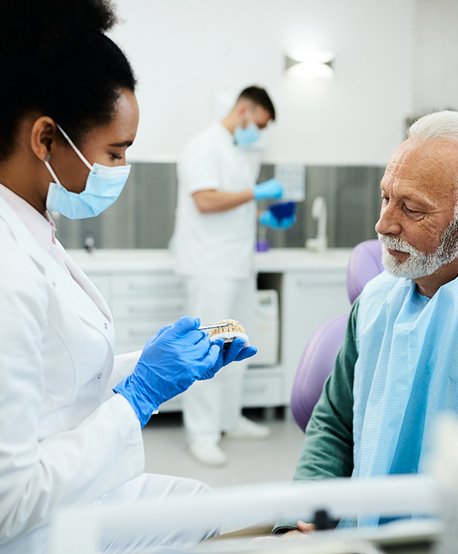
Qualifying for dentures isn’t hard, assuming you have good oral health. Almost any adult with missing teeth can be a potential candidate for these prosthetics; the treatment requirements aren’t strict. All that said, some people do benefit from dentures more than others. One patient may be better off with other tooth replacements, while another may lack the healthy gums to support dentures.
Given these facts, please consult our dentists to confirm your treatment candidacy. They’ll closely assess your smile to see if dentures would help.
Types of Dentures
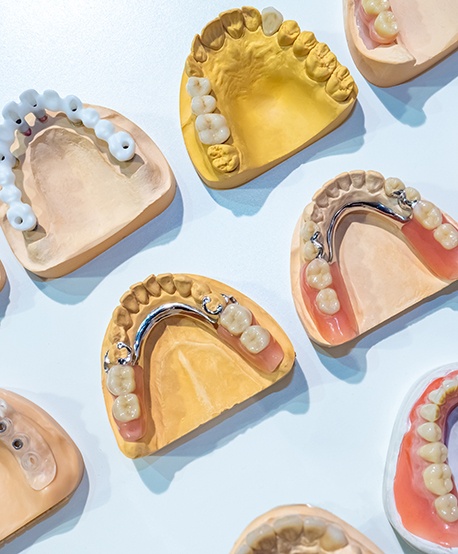
Here at our office, we offer several types of dentures with distinct strengths. We’ll recommend one of the following kinds to you (if any) after your oral exam:
Partial Dentures
Per their name, partial dentures only replace a few teeth. They thus fit snugly over the gums through suction, or they clasp onto nearby “abutments” (i.e., nearby natural teeth) present. Once securely in place, their pink acrylic bases and color-matched teeth let them blend seamlessly with your smile.
Full Dentures
Unlike a partial one, a full denture “restores” an entire arch of teeth at once. The device must therefore rely on suction force for security; it can’t (and doesn’t) depend on abutments. However, a full denture still has one thing in common with a partial type: it fits snugly and comfortably over the gums.
Implant Dentures
Patients who want a “permanent” solution should consider implant dentures. Rather than suction or clasps, these kinds secure themselves with dental implants that fuse with your jaw. That means an implant denture won’t slip or fall off as a traditional one could. Better yet, this appliance will prevent and reverse cases of facial collapse.
The Benefits of Dentures

By getting dentures in Westbury, you’ll enjoy benefits like:
- A Beautiful Smile – Modern dentures look incredibly realistic, as they’re composed of high-quality materials. Your friends and family won’t notice they aren’t “real” teeth.
- Improved Nutrition – By helping you chew and eat a wider range of food, dentures expand your meal options and improve your nutritional health.
- Boost in Confidence – Since they restore one’s full smile, dentures give their patients large boosts in confidence. Using them should help you feel more self-assured about your looks.
- Cost-Effectiveness – Even as dentures work well, they have lower prices than dental bridges and dental implants. Patients with tight budgets would find them very cost-effective.
Dentures FAQs
Do Dentures Break Easily?
While not necessarily easily, dentures can break sometimes. The prosthetics are durable but not invincible; they’ll fracture under enough force.
Most dentures break (if at all) due to accidents. For instance, a patient may drop these restorations while cleaning, inserting, or even removing them. Such a fall can cause a break or fracture, forcing you to see a dentist for crucial repairs.
Given these facts, you should remember to take good care of your dentures. Handle them carefully and keep them clean to ensure they last as long as possible. With this approach, your restorations should work for at least five to seven years or so.
Can Dentures Become Ill-Fitting?
Dentures can (and often do) become ill-fitting, as sad as it is to say. Even quality pairs may not suit your mouth after several years.
The issue is that tooth loss erodes your jaw, slowly altering your mouth’s shape in doing so. Dentures don’t stop this process from occurring even when they fit well. As a result, restorations made a while ago will eventually fail to fit your mouth’s new shape.
Of course, you can (and should) fix ill-fitting dentures. Your local dentist can have them relined or readjusted to fit your current mouth. On the other hand, they could give you new dentures that suit you better.
Will Dentures Change the Shape of My Face?
Dentures do change the shape of your face, but you don’t need to worry. This effect is actually one of the major upsides of treatment.
You see, a person’s facial muscles start sagging when they lose teeth. Tooth loss causes the jaw to erode, leaving the skin of (and around) your face with less support. The good news is that dentures will lift these sagging muscles, thus improving your appearance.
Ill-fitting dentures don’t support facial muscles well, so monitor your restorations for changes in their fit. You should have them refitted or replaced if they don’t match your mouth’s shape.
Is It Hard to Talk with Dentures?
It’s often hard to talk with dentures at first. Indeed, most patients must adjust to the restorations before they can speak clearly and easily with them.
The time needed to “get used to” dentures varies from person to person. That said, the adjustment usually goes more quickly when you practice speaking with them. Frequent trial and error will help you detect changes in your palate, ensuring you know what to correct for.
It doesn’t take much to practice speaking with dentures. For example, you could read aloud to yourself and repeat difficult-to-pronounce words. Another idea is to speak slowly; fast speech is more likely to come out muffled.